

If you wouldn’t know where to start with responding to the abundance of planning consultations being thrown our way, fear not. Below is a step-by-step visual guide to using Cherwell District Council’s planning portal to make your views count.
All links in this post open in a new window, so you can keep referring to this page as you go along.
Step 1: visit the Planning Portal
If you prefer, you can search for Cherwell District Council Planning Portal and follow the steps below:
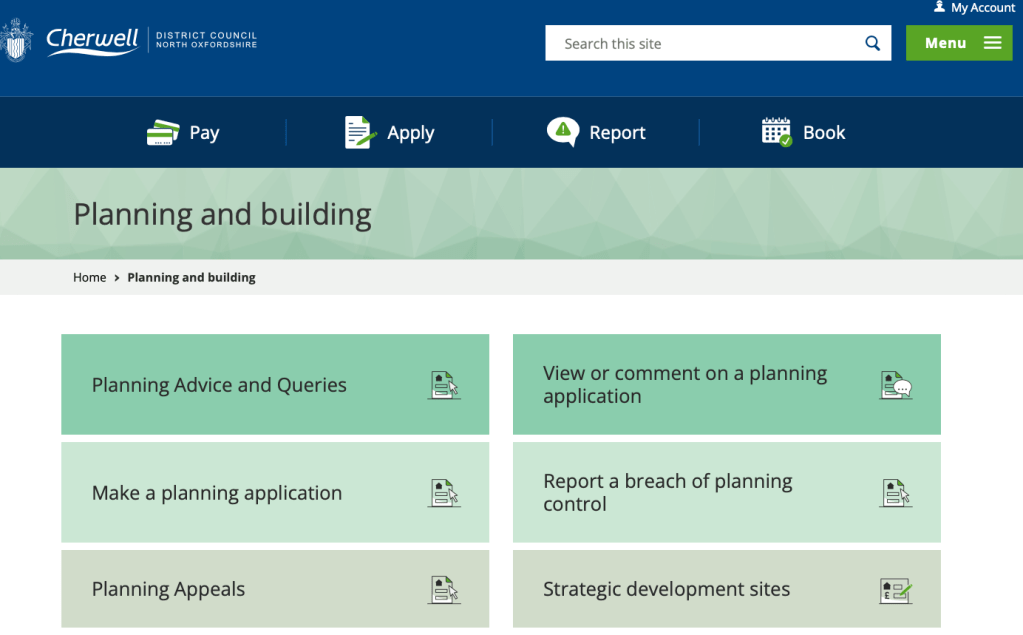
Scroll down to the green ‘online planning register’ button at the bottom of the page which will take you to the next page:
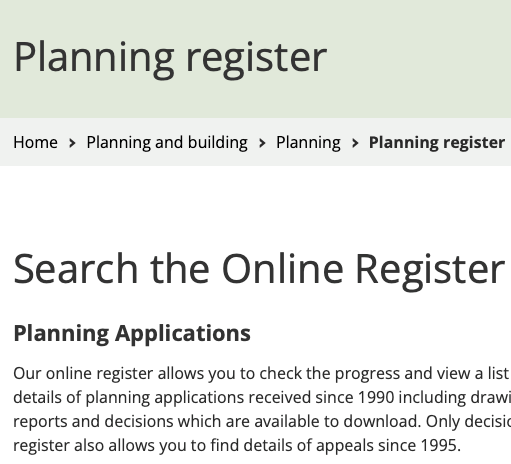
Step 2: search for the planning application
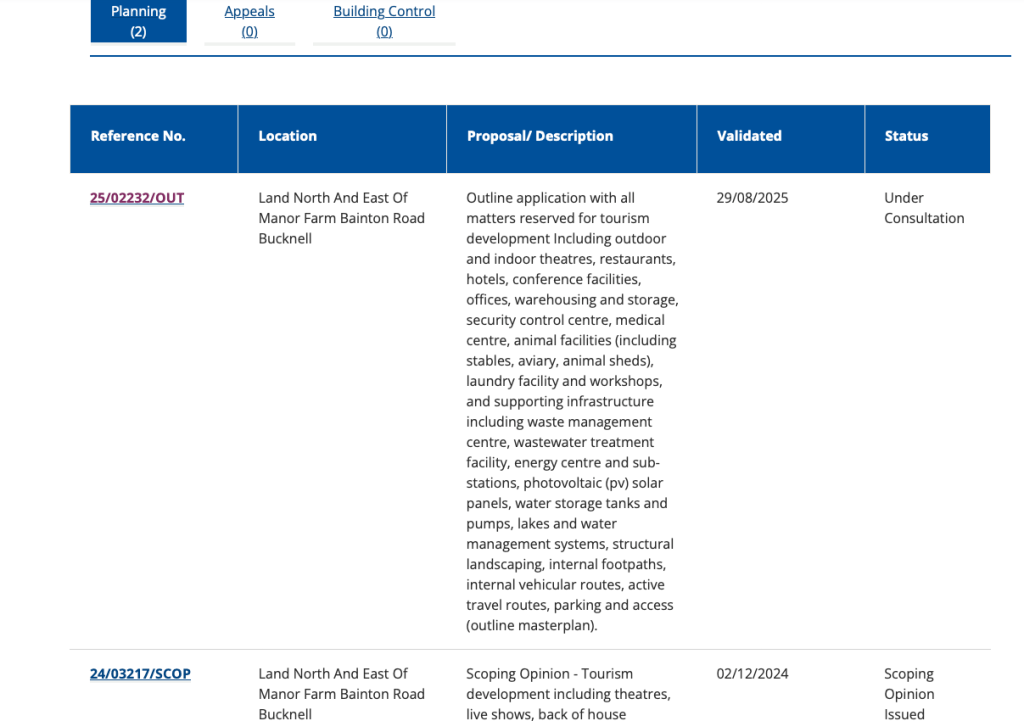
If you have the code for the application, type it in the relevant field. For example, 25/02232/OUT for Puy du Fou or 25/02190/HYBRID for Heyford Park.
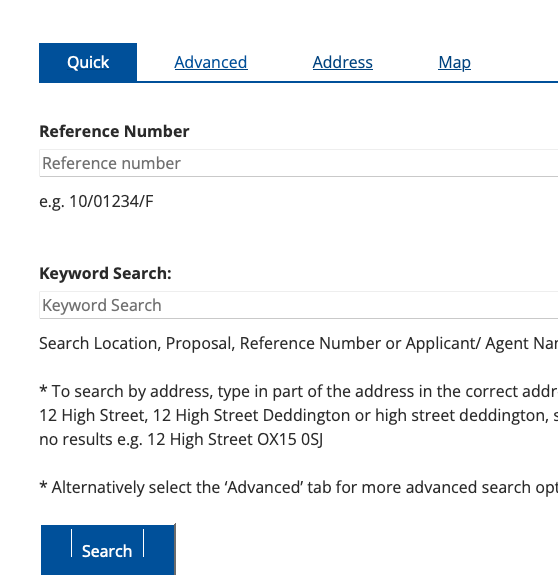
This will bring up the page you are looking for – be sure to check the dates and code! For Puy du Fou there are two consultations listed on the portal, and you don’t want to waste your time responding to the closed one:
Here are the quick links to consultations that are currently open:
Step 3: comment
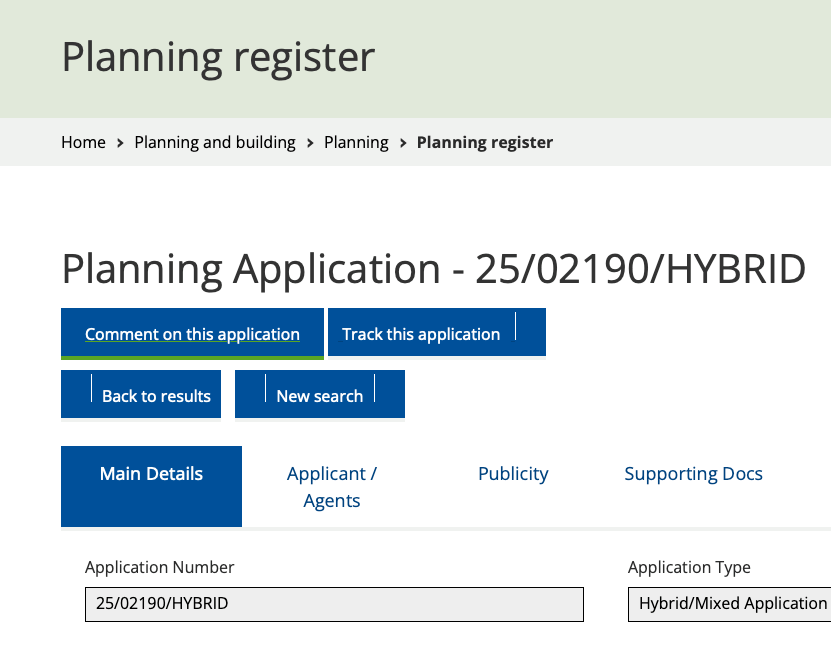
Click on ‘comment on this application’:
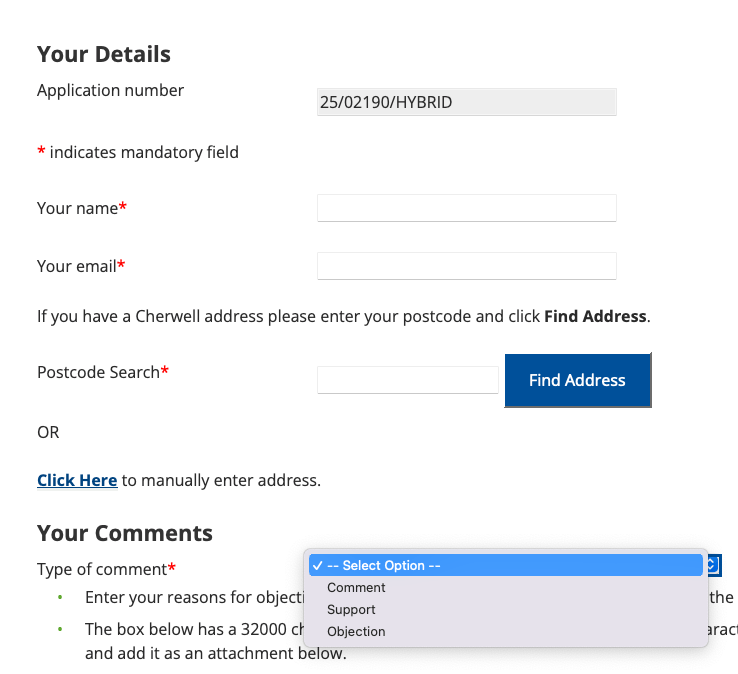
You will then see the below screen, where you can fill in your details (this is compulsory) and add your response.
Step 4: submit
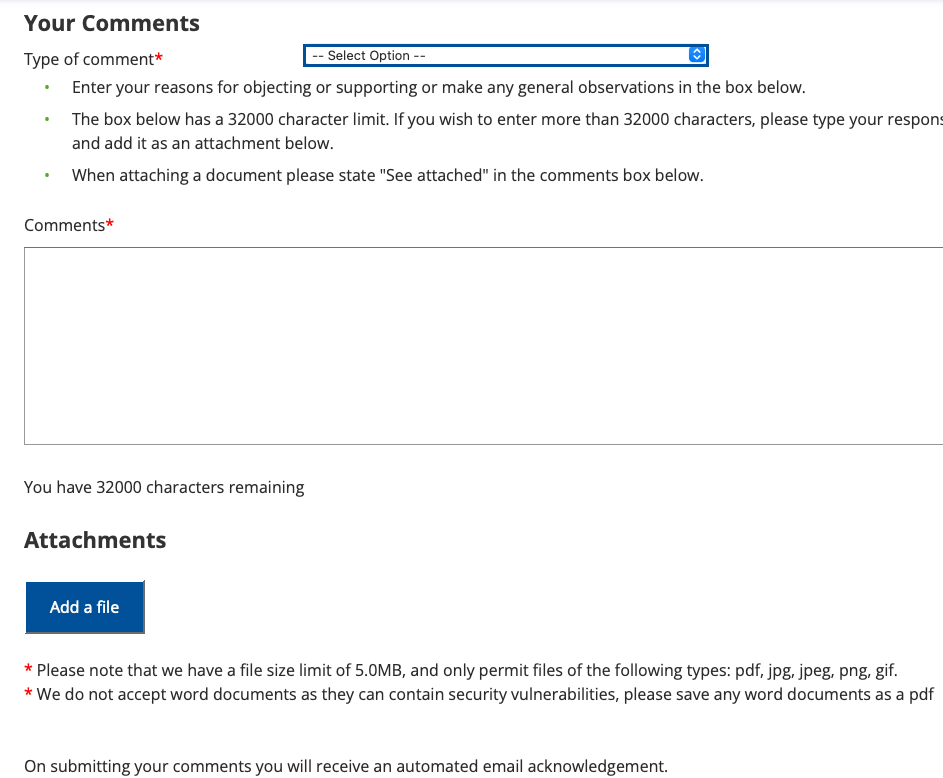
You can submit your response as an attachment, or you can type it into the field on the webpage.
Top 10 tips from NORA
- Do it now. Consultation deadlines have a way of coming and going, don’t miss them
- Comments can be brief. Your contribution doesn’t have to be a novel!
- Comment on a planning topic you are interested in. Planning applications can be overwhelming in volume and jargon. You don’t have to comment on all of it, you can choose to comment on an aspect of the proposals, for example traffic, or wildlife or impact on the landscape
- Don’t overthink it. It is better to submit relevant but incomplete thoughts than nothing at all.
- Comment more than once. Yes, you can! If you have an ‘and another thing!’ moment a day later, just add it as a new comment.
- All members of a household can respond individually. Responses are not limited to 1 per address. That includes children!
- Keep a copy of your response. We highly recommend writing it in a Word document, and uploading it or copy-pasting it into the portal. That way you can include images in your response too.
- Email your response instead of using the portal: planning@cherwell-dc.gov.uk if you prefer.
- Keep it to ‘material planning considerations’. Personal opinions are not taken into consideration, i.e., ‘The developer is rubbish’, or ‘Joe Bloggs shouldn’t sell his land’. Don’t name individuals, your response will be rejected. See below for a list of material planning considerations.
- Check back a few days later to see if your response has been added to the portal. With large consultations the council often struggles to keep up with submissions. If yours doesn’t show after a week, email them to chase it up. planning@cherwell-dc.gov.uk
What are ‘material planning considerations’?
According to CDC, material considerations can include (but are not limited to):
- Design, appearance and materials
- Overlooking/loss of privacy
- Loss of light or overshadowing
- Parking provision
- Highway safety
- Traffic congestion
- Effect on listed buildings and conservation areas
- Environmental pollution e.g. noise, odour, dust, smoke etc
- Drainage and flood risk
- Landscape impact
- Nature conservation
- Impact on trees
- Allocated development sites identified in the Local Development Plan and or Neighbourhood Development Plans
- Government policy and guidance
- Previous planning decisions (including appeal decisions)
However, whilst they may be important to you, there are matters that are not material considerations and cannot be considered when determining an application. These include:
- The applicant’s background
- Loss of views
- Loss of property value
- Maintenance of property
- Boundary disputes, covenants or other property rights
- Private rights of way
- Loss of trade or increased competition
 NORA North Oxfordshire Resident Action
Leave a comment